
 A thoughtful article was published on The Gospel Coalition website on June 17, 2019, written by Bryan Weynand, (article link) where he contrasts the view of evil between J.R.R. Tolkien’s The Lord of the Rings (LOTR) and the HBO series Game of Thrones (GOT) which is based on George R.R. Martin’s A Song of Ice and Fire series.
In the article, Weynand, writes that in the LOTR evil is a force that surrounds and tempts all in Middle Earth, and, in fact, overcomes characters in the books who have a “knowledge of good” such as Boromir, Saruman, Denethor, and Gollum.
By contrast, he writes that characters such as Cersei Lannister or Melisandre, from GOT, are “unnaturally dominated by a desire to do evil”. He submits the series doesn’t contain the idea that evil has overcome the character’s desire to do good, as in LOTR, rather, the characters in GOT are a “distinct class of human . . . with a special appetite for hatred and perversity.”
This contrast leads to a consideration of how evil is viewed by our current culture compared to traditional Christian theology, which mirrors LOTR, proclaiming since the created world is in disorder, evil and temptation affect all people and groups. In illustrating this thought, Weynand writes:
Criticism of Tolkien’s supposedly bland depictions of evil strikes me as reflecting our culture’s stunted view of evil, which isolates it as something existing only in certain persons or groups—and thus removable from our immediate world and communities. Whenever I pass a well-meaning sign that reads, “Hate is not welcome here,” I can imagine Sauron’s scorn at the notion that hate is something so discrete and excisable.
After reading the article and above quote, a few questions come to mind:
How do you think evil is viewed in today’s culture?
Do you agree that today evil is viewed in isolation where it has been removed from our immediate world and exists in certain groups and not in others?
In contrast, do you agree with Tolkien’s view, and Christianity’s, where evil and temptation are all around us and all people are at the risk of being affected, and transformed, by it?
Finally, how does your view of evil affect your worldview?

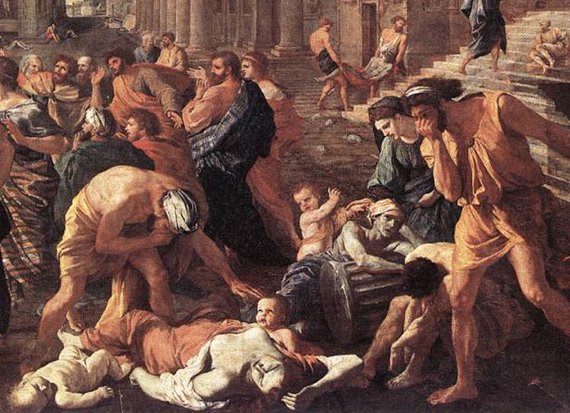 From approximately 250-270AD, a plague decimated the Roman Empire named the Plague of Cyprian. At the height of this plague, 5,000 people per day were said to have died in Rome. This plague is believed to have started in the North African city of Alexandria. The Bishop of Alexandria, Dionysius, described in a letter that while others fled the city in the hopes of escaping the disease and death, the Christians in the city stayed behind to serve those who were sick and dying; often to their own demise. The letter describing acts of sacrificial, neighborly love, by Christians in the city, can be found in Eusebius’ record of early church history.
 I am currently making my way through the book, Early Christian Writings, translated by Maxwell Staniforth, and came across the The Epistle to Diognetus. The document was discovered by Thomas of Arezzo in Constantinople in about 1435. The date of its writing is estimated to be between 120-200AD during a time of Christian persecution.
 Last Sunday, Pastor Clint Tolbert at First Presbyterian Church, Maumee, Ohio, introduced a new sermon series on the book of First John titled, “Living as Children of the Light.” During the introduction, he spoke about the difficulties of being a teenager. He expressed that while being a teenager has always been difficult, teens today face greater challenges than previous generations, “as they seek to become the young men and women that God created them to be.”
 It has been my experience that eighth grade students have a unique ability to connect what they hear, see and read to the world around them as they mature into teenagers. This was illustrated most recently for me at a weekly after school Wyldlife middle school meeting. At the meeting, an eighth grade student used the example of a bumper sticker to connect with and illustrate, with brilliant clarity, the foundational theological truth which we were discussing.
 Thoughts of an Assistant Pastor